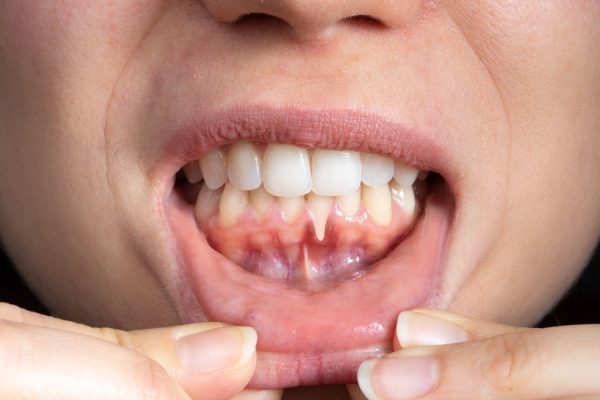
Gum recession is a common dental condition where the margin of the gum tissue surrounding the teeth pulls back, exposing more of the tooth or its delicate root structure. Unlike the visible crown of the tooth, roots lack a protective layer of hard enamel, leaving them vulnerable to sensitivity, decay, and damage if left unprotected.
What Causes Gums to Recede?
Gum recession rarely happens overnight; it is typically a gradual process driven by a combination of lifestyle habits, anatomy, and bacterial infections:
- Aggressive Brushing: Scrubbing teeth with too much force or using a hard-bristled toothbrush can wear away gum margins and enamel over time.
- Periodontal (Gum) Disease: Chronic bacterial plaque buildup causes inflammation that destroys the supporting bone and connective fibers, causing gums to detach and recede.
- Genetics and Thin Gum Tissue: Some individuals inherit naturally thin gum biotypes or minimal attached gingiva, making them more susceptible to recession under minor physical stress.
- Teeth Grinding and Clenching (Bruxism): Excessive occlusal forces place abnormal mechanical stress on the neck of the tooth, contributing to micro-fractures and gum loss.
- Misaligned Teeth: When teeth are rotated or crowded, the outer layer of bone and gum covering the root can be exceptionally thin.
- Tobacco Use: Smoking and smokeless tobacco reduce blood circulation in gum tissues and accelerate periodontal damage.
Why Are Exposed Roots a Concern?
When roots become uncovered, two major complications often follow:
- Dentin Hypersensitivity: The root surface is made of cementum and dentin, which contain thousands of microscopic tubules leading directly to the dental pulp. Temperature changes from cold water or hot coffee trigger sharp, sudden pain.
- Root Cavities: Dentin is softer than enamel and dissolves at a much lower acid threshold, allowing decay to develop and spread rapidly along the root.
Effective Ways to Prevent Gum Recession
While receded gum tissue does not grow back naturally on its own, adopting proper oral care habits can stop progression effectively:
- Switch to a Soft-Bristled Brush: Clean teeth using a gentle, circular sweeping motion at a 45-degree angle toward the gumline (the Modified Bass technique).
- Clean Interdental Spaces Daily: Floss or use interdental brushes to remove plaque from areas where a standard brush cannot reach.
- Schedule Regular Dental Cleanings: Professional scaling every six months removes hardened tartar before it induces bone loss.
- Wear a Protective Night Guard: If you grind your teeth during sleep, a custom occlusal splint distributes bite forces evenly.
- Use Desensitizing Toothpaste: Pastes containing potassium nitrate or stannous fluoride help block open dentinal tubules to alleviate sensitivity.
Scientific References
- Carranza's Clinical Periodontology, 13th Edition. Newman, Takei, Klokkevold, & Carranza.
- Clinical Periodontology and Implant Dentistry, 6th Edition. Jan Lindhe & Niklaus P. Lang.
- American Academy of Periodontology (AAP) – Clinical Parameters on Gingival Recession.
- American Dental Association (ADA) – Oral Health Resources on Periodontal Health and Dentin Sensitivity.