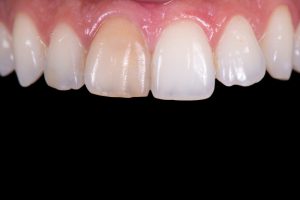
Have you ever noticed a single tooth gradually losing its natural bright color and turning grey, brown, or even dark black months—or years—after an accident or fall? This type of discoloration is not an ordinary external stain caused by coffee or food; it is a biological sign of internal changes taking place deep within the tooth's structure.
What Actually Happens Inside the Tooth After Trauma?
Inside every healthy tooth lies the dental pulp—a living chamber containing sensitive nerves and microscopic blood vessels surrounded by hard dentin. When a tooth receives a blunt force or impact, three main biological phenomena can cause it to darken:
- Internal Pulpal Bleeding (Intrapulpal Hemorrhage): The force of the impact ruptures the tiny capillaries inside the pulp chamber. Red blood cells leak into the microscopic tubes of the dentin (dentinal tubules). Over time, these red blood cells break down, releasing iron. This iron combines with tissue chemicals to create dark iron sulfides, which stain the tooth structure from the inside out.
- Loss of Vitality (Pulp Necrosis): If the impact is severe enough to sever the blood vessels entering the root tip, the pulp tissue loses its blood supply and dies. As the dead tissue decomposes, dark protein breakdown products penetrate deeply into the dentin, giving the tooth its distinct greyish or shadowy appearance.
- Defensive Hardening (Calcific Metamorphosis): Sometimes the nerve survives, but reacts defensively by rapidly depositing thick layers of secondary dentin inside the pulp space. As the hollow chamber fills up, the tooth loses its natural light translucency and looks noticeably darker, yellow-brown, or dull grey.
Can a Darkened Tooth Be Restored?
Modern endodontic and restorative dentistry offers effective solutions depending on the tooth's vitality and radiographic findings:
- Root Canal Therapy: If the pulp is non-vital (dead), the dentist cleans out the necrotic tissue, disinfects the internal canals, and places a biocompatible sealing material to prevent infection.
- Internal Bleaching ("Walking Bleach"): For root-canal-treated teeth, a safe, concentrated bleaching agent is placed inside the hollow tooth chamber for a few days to oxidize and dissolve deep iron and pigment deposits.
- Cosmetic Restorations: If the tooth has significant structural damage or persistent deep staining, porcelain veneers or full ceramic crowns can be placed to match the shade of neighboring teeth seamlessly.
Scientific References
- Andreasen, J. O., Andreasen, F. M., & Andersson, L. Textbook and Color Atlas of Traumatic Injuries to the Teeth. 5th Edition, Wiley-Blackwell.
- Hargreaves, K. M., & Berman, L. H. Cohen's Pathways of the Pulp. 12th Edition, Elsevier.
- American Association of Endodontists (AAE). Clinical Treatment Guidelines: Management of Traumatic Dental Injuries and Internal Bleaching Protocols.